Here's an uncomfortable truth about the roofing industry: attic ventilation is the part of your roof that gets talked about least and matters most. It's not glamorous, it doesn't photograph well for a yard sign, and doing it right costs a little more — so on plenty of Florida roofs, it quietly gets treated as an afterthought. Then, years later, the homeowner is dealing with cooked shingles, a sky-high electric bill, or mold on the decking and has no idea the roof was set up to fail from day one.
We think you deserve the full story. Here's what proper attic ventilation actually does, why Florida makes it non-negotiable, and the mistakes we see over and over on roofs other companies installed.
Your Florida Attic Is Hotter Than You Think
On a July afternoon in Tampa Bay, the air in an under-ventilated attic can climb past 140°F — far hotter than the air outside. That trapped heat doesn't just sit there politely. It radiates down through your ceiling and forces your air conditioner to fight a furnace it can't see, and it bakes your shingles from the underside while the sun bakes them from the top. Add Florida's humidity, and the same stagnant attic becomes a moisture trap where condensation quietly rots decking and feeds mold.
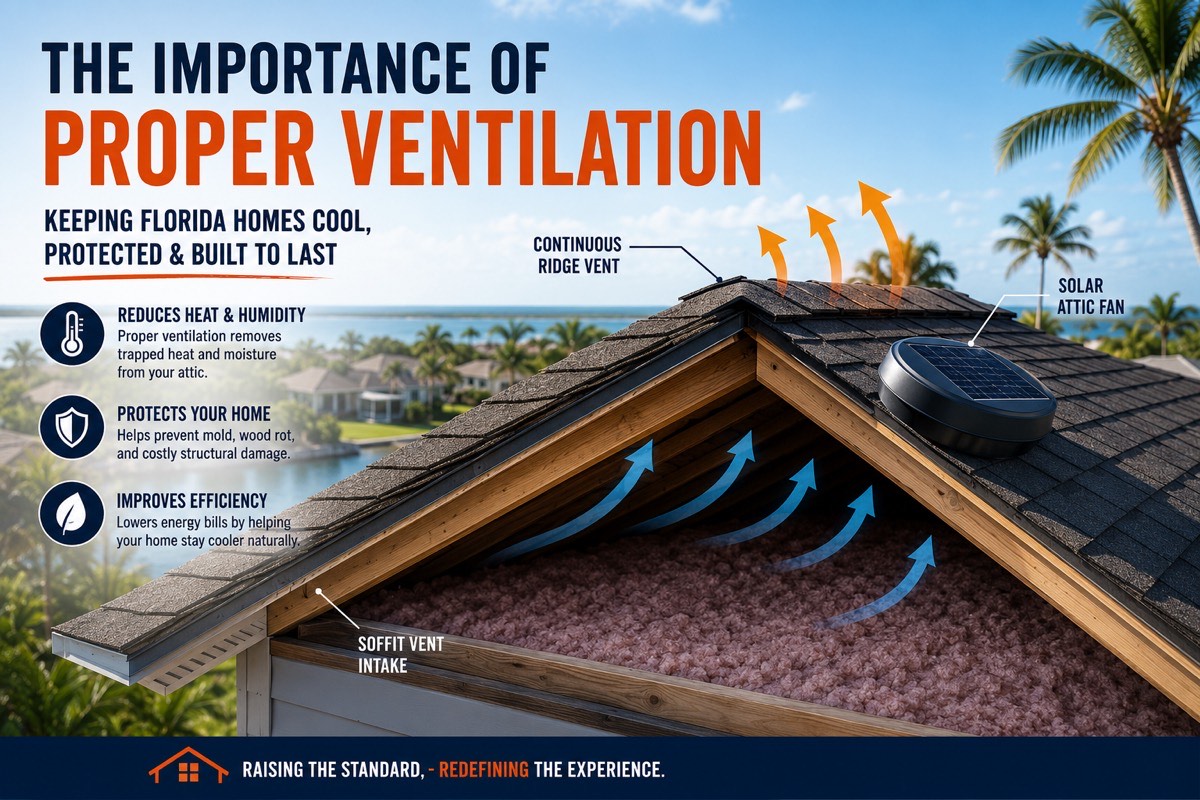
Proper ventilation is the release valve for all of it. A correctly built system lets cooler outside air flow in low, sweep up through the attic carrying heat and moisture with it, and exhaust out high — continuously, for free, with no moving parts required.
How a Balanced System Actually Works
The word that matters is balanced. A ventilation system has two halves, and both have to be there in the right proportion:
- Intake — cool air enters low, almost always through vented soffit along the roof's edge
- Exhaust — hot air escapes high, ideally through a continuous ridge vent running along the peak
Air enters at the soffit, warms as it rises, and leaves at the ridge. That gentle, constant convection is the whole game. A continuous ridge vent — the kind hidden under the cap shingles along your roof's peak — paired with adequate soffit intake is the quietest, most reliable ventilation a Florida home can have, because it has no motor to fail and works every hour of every day.
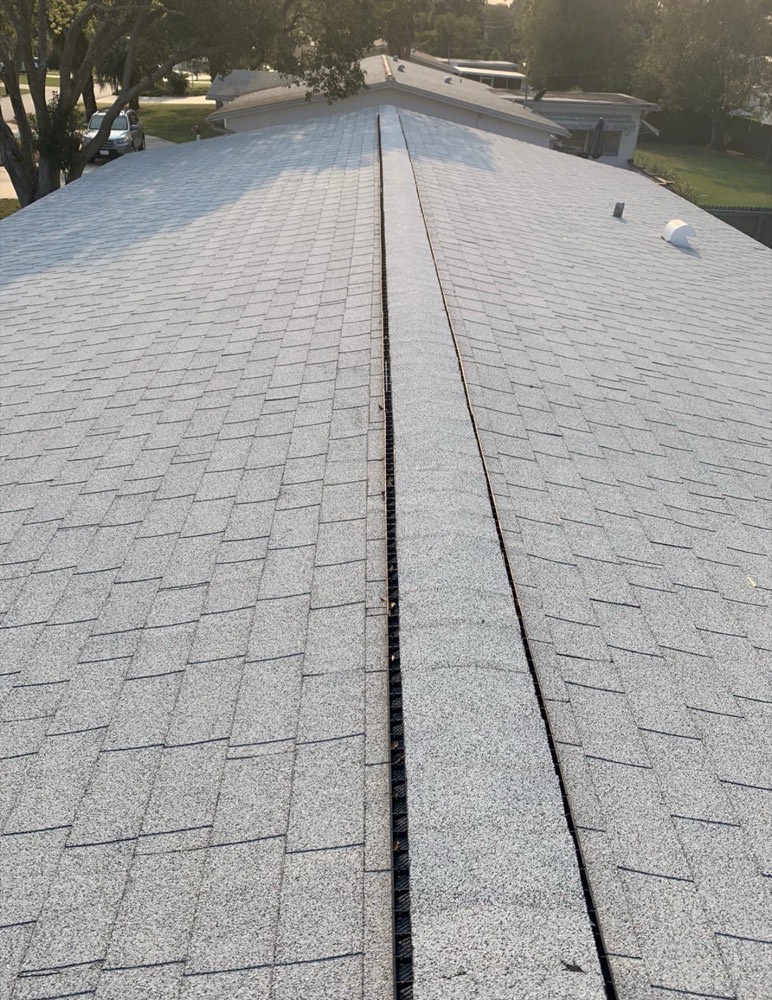
The photo above shows a continuous ridge vent running the length of a roof peak — the exhaust half of a balanced system, cut into the top of the shingle field so hot air can escape.
The Mistakes We Find Constantly
When we inspect roofs other companies installed, the same ventilation problems show up again and again:
- Exhaust with no intake. A ridge vent or attic fan is useless if there's no soffit intake feeding it — it just pulls air from other leaks and short-circuits. We find painted-over, insulation-blocked, or simply absent soffit vents on Florida homes all the time.
- Mixed exhaust types fighting each other. A ridge vent AND box vents AND a power fan on the same attic don't add up — they can pull air from each other instead of from the soffit, actually reducing airflow. More vents is not automatically more ventilation.
- Not enough of either. Building code sets a minimum ratio of vent area to attic floor area for a reason. Under-vented attics are one of the most common issues we document, and homeowners rarely know until we get in the attic.
- Insulation choking the soffit. Over-stuffed insulation at the eaves blocks the exact spot air needs to enter. Simple baffles fix it — if anyone bothers to install them.
Passive vs. Powered: The Honest Take
You've probably seen solar attic fans — the round units with a small solar panel that actively pull air out of the attic. They're a legitimate tool, and in the right situation they genuinely help: complex rooflines with little ridge length, attics that run exceptionally hot, or homes where adding ridge venting isn't practical. Because they're solar, they add no cost to your electric bill.
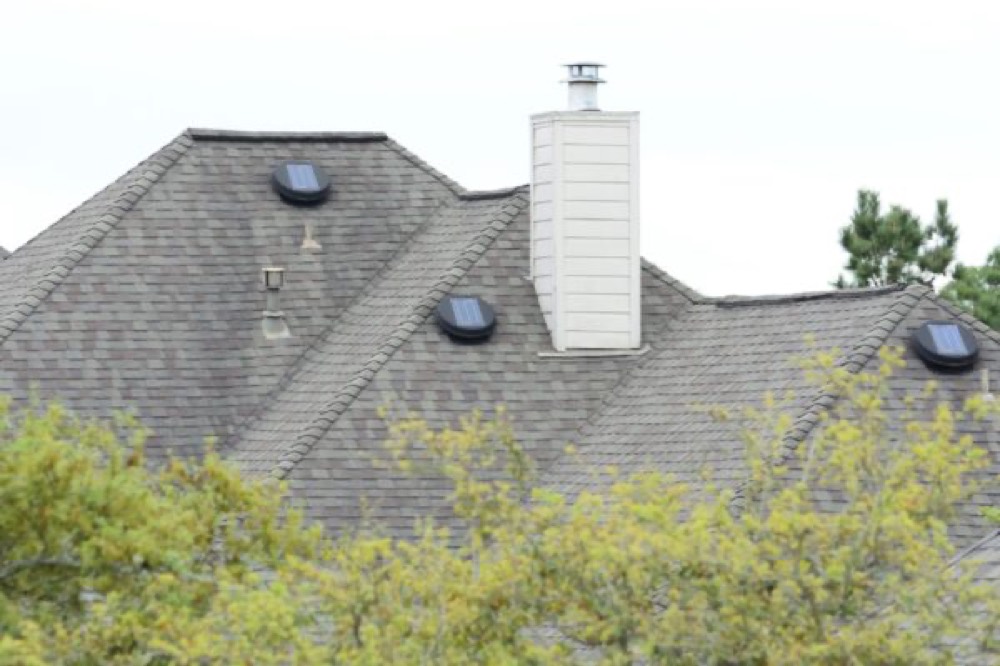
But here's the honest part most sales pitches skip: a powered fan is not a substitute for adequate intake. Put a fan on an attic with blocked or missing soffit vents and it will happily pull conditioned air out of your living space through ceiling gaps — making your AC work harder, not easier. Solar fans earn their keep only as part of a balanced system, not as a band-aid over one that was never built right. Any roofer selling you a fan without looking at your intake is selling you a gadget, not a solution.
What Proper Ventilation Actually Buys You
- Longer shingle life. Shingles cooked from both sides fail years early. Ventilation is one of the cheapest ways to protect the most expensive part of your roof.
- Lower cooling bills. A cooler attic means less heat radiating into your home, which means an AC that runs less during a Florida summer.
- No moisture, no mold. Continuous airflow exhausts humid air before it condenses on decking and framing.
- Your warranty stays valid. This is the one almost nobody mentions: major shingle manufacturers, Atlas and CertainTeed included, require adequate attic ventilation as a condition of their warranty. If your shingles fail early and the manufacturer finds the attic was under-ventilated, coverage can be reduced or denied. Poor ventilation can quietly void the very warranty you paid for.
So Why Do Roofers Downplay It?
Not out of malice, usually — but the incentives are real. Ventilation is invisible once the job's done, so it's an easy place to cut a corner and save a few dollars on a competitive bid. It requires getting into a hot attic to assess intake, which takes time. And "we'll add a couple of vents" sounds like enough to a homeowner who doesn't know to ask about balance. The result is a lot of Tampa Bay roofs that look fine from the street and are slowly cooking themselves from the inside.
We'd rather tell you the truth up front. When we quote a roof replacement, ventilation is part of the conversation, not an upsell we spring later — and when we do a roof inspection, the attic's airflow is on the checklist. If your ventilation is fine, we'll tell you. If it's quietly costing you shingle life and AC runtime, you'll want to know that too.
Frequently Asked Questions
How do I know if my attic is under-ventilated?
Common signs include a second floor that never cools down, unusually high summer electric bills, shingles curling or aging faster than they should, a musty attic smell, and rust on nail tips or ductwork in the attic. If your attic feels dramatically hotter than the outside air on a summer day, ventilation is almost certainly inadequate. A free ventilation assessment confirms it.
Are solar attic fans worth it in Florida?
They can be — but only on an attic that already has adequate soffit intake. On a balanced system, a solar fan adds active exhaust at no electricity cost and can meaningfully lower attic temperatures. On an attic with poor intake, a fan can actually pull cooled air out of your living space and make things worse. The intake has to be right first.
Can bad ventilation really void my shingle warranty?
Yes. Major manufacturers including Atlas and CertainTeed require balanced attic ventilation to spec as a condition of their material warranties. If shingles fail prematurely and an inspection shows the attic wasn't ventilated adequately, the manufacturer can reduce or deny coverage. It's one of the most overlooked warranty requirements in roofing.
Should ventilation be upgraded during a roof replacement?
It's the ideal time. Ridge vents, baffles, and intake corrections are far easier and cheaper to install while the roof is open, and the cost folds into one project. That said, many ventilation fixes can be done any time — you don't have to wait for a new roof to stop cooking the one you have.
Does more attic insulation replace ventilation?
No — they're partners, not substitutes. Insulation slows heat transfer between your attic and living space; ventilation removes the heat and moisture from the attic itself. In fact, insulation installed carelessly at the eaves often blocks the soffit intake ventilation needs. The two have to be designed to work together.
Ready to Find Out Where Your Attic Stands?
If any of the warning signs above sound familiar — or you just want to know your roof was built right — we'll take an honest look. Redefine Roofing assesses and upgrades attic ventilation and insulation across Hillsborough, Pinellas, Pasco, Manatee, Sarasota, and Hernando Counties, and the assessment is free and no-pressure.
Call (813) 590-9050 or request your free assessment online today.