Tampa Bay doesn't get Midwest-sized hail often, but it doesn't need to. Even dime- and quarter-sized hail, driven by 50 mph thunderstorm winds, bruises shingles in ways you'll never notice from your driveway — and a bruised shingle is a leak on a delay timer. Here's how to assess your roof after a hailstorm, what damage actually looks like, and when to bring in a professional.
Why Hail Damage Hides
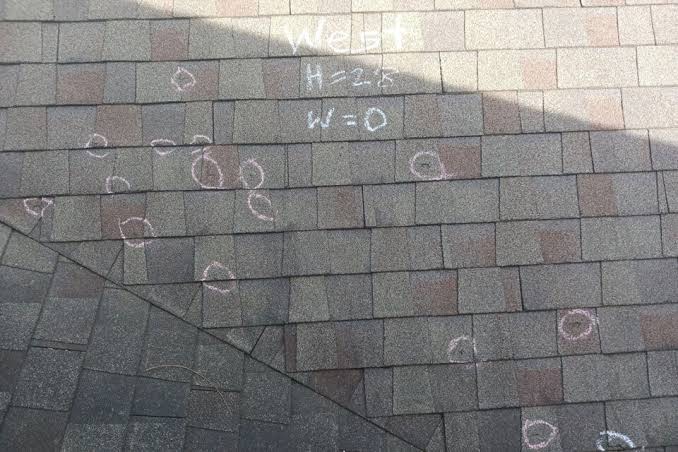
A hailstone rarely punches a visible hole in a shingle. What it does instead is subtler and just as destructive: the impact crushes the protective granules into the asphalt layer and fractures the fiberglass mat underneath. The spot may look like nothing more than a small dark smudge. But that shingle has lost its UV protection and structural integrity at the impact point, and Florida's sun goes to work on the exposed asphalt immediately. Six months to two years later, the impact point cracks through — and now you have a leak that seems to come from nowhere.
This delay is exactly why hail damage catches homeowners off guard, and why insurance companies see so many claims filed too late. Florida law currently gives you a limited window — generally one year from the date of loss — to report a claim. If you wait for the leak to appear, that window may already be closed.
What You Can Check Safely From the Ground
You should never climb on a roof after a storm — wet shingles and hidden damage make it genuinely dangerous. But the ground level tells you a lot:
- Downspouts and gutters: a sudden flush of granules — it looks like coarse black sand — below downspout outlets is the classic post-hail signature.
- Soft metals: hail dents aluminum long before it damages shingles. Check gutters, downspouts, window screens, mailboxes, and AC unit fins for fresh dimples.
- Cars and outdoor furniture: if your car took dings in the driveway, your roof took hits too.
- Ground debris: shingle fragments, granule piles on the driveway, or torn window screens all indicate meaningful impact energy.
- From a distance with binoculars: look for dark spots or bruise-like discoloration in a random, scattered pattern (not straight lines, which suggest blistering or foot traffic instead).
What a Professional Looks For on the Roof
When our inspectors examine a roof after a hail event, we're checking for evidence patterns that separate real hail damage from ordinary wear: impact bruises that feel soft under thumb pressure (like a bruised apple), granule loss concentrated at impact points with exposed black asphalt, cracked or fractured mats visible when a shingle tab is lifted, and dents on ridge caps, vents, flashing, and pipe boots — the metal components that record every impact. We photograph everything, because that documentation is what an insurance claim gets built on. This is part of every free roof inspection we perform after storms.
The Timeline That Matters
- Within days of the storm: do the ground-level checks above. Note the storm date — it matters for your claim.
- Within a couple of weeks: if you saw any indicators, schedule a professional inspection. Fresh damage is easiest to attribute to a specific storm.
- If damage is confirmed: report the claim promptly and get temporary protection on any compromised areas. Our storm damage team handles documentation and works directly with your carrier.
- Don't wait for a stain on the ceiling. By then, you're paying for interior repairs too — and possibly out of pocket if the claim window has closed.
A Word About Door-Knockers
After every significant hail event, out-of-town crews sweep through Tampa Bay neighborhoods promising free roofs. Some are legitimate; many are not. Before signing anything, verify a Florida license (ours is CCC 1331457 — you can look any contractor up at myfloridalicense.com), confirm a local physical address, and be wary of anyone who pressures you to sign an agreement on the spot or offers to "take care of" your deductible — that's insurance fraud, and the homeowner shares the risk.
What Hail Damage Is Not
Not every blemish on a roof is hail, and an honest inspection separates the two. Blistering (small pops from trapped moisture, usually in neat clusters), normal granule loss along high-traffic edges, and mechanical scuffs from past foot traffic are wear items — real, but not storm damage, and not claimable. Insurance adjusters know the difference, and so do we. Filing a claim for wear and tear wastes your time and can complicate future claims, which is one more reason to start with an inspection from a company that isn't paid to find damage that isn't there.
The Bottom Line
Hail damage is sneaky, but it's not undetectable — the evidence is there within hours of the storm if you know where to look. If hail has passed over your neighborhood anywhere in Hillsborough, Pinellas, or the surrounding counties, a free professional inspection settles the question with photos and a written report. If your roof is fine, you'll know. If it's not, you'll be glad you found out a year before the leak.